Mojave in my Heart

From a not-so childlike beginning in New York City to my child inspired world here and now


2 Comments

How We Homeschooled Today: 9th Grade

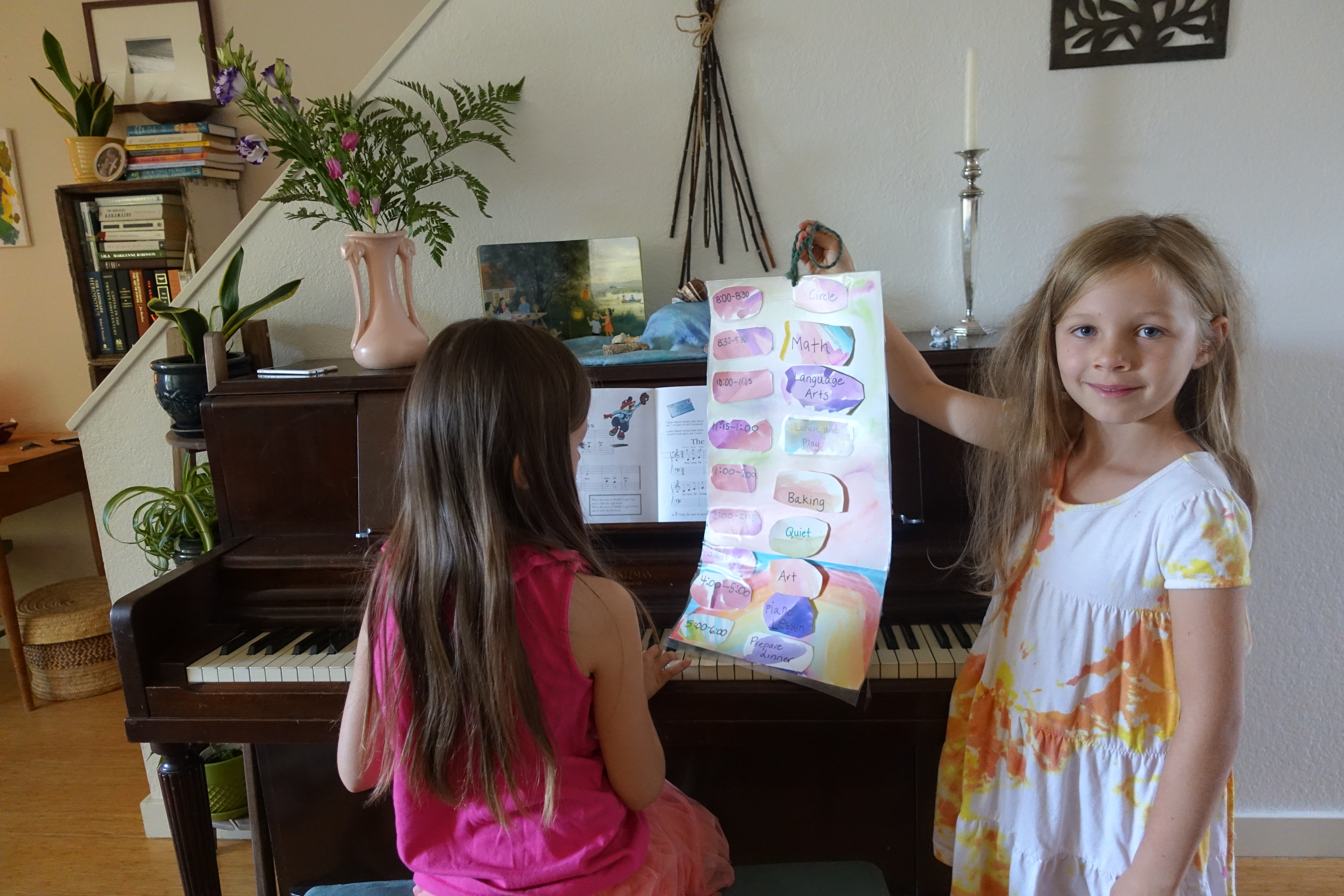
Most days, like this one begin early for me & a little later for the girls. I’ve always enjoyed the dark, quiet hours. Early morning fits my need for the quiet & reflective space my head desperately desires. Stephen and I enjoy a leisure devotion time, where we read, journal, and talk over coffee, by candlelight no less! It is a truly sparkly and magical way to start the day, though some days there’s more waffling and coffee. Yoga or the gym follows this restorative session and by the time I get home or am finished, the girls have had their breakfast & their own exercise. These days they’re enjoying either the gym or a 30 minute workout video Ada absolutely lots on youtube. Anna, the host, is from Germany. If I could just get them to follow it IN German, we’d have double periods of our foreign language each day!

Poetry recitation began our school time together. Arlene & Ada are both wrapping up their recitations of Poe’s “The Raven.” It is a substantial poem with 108 lines & they’ve worked diligently at it. We’ve done recitations since before they read and it has had wonderful payoff. Their aptitude for memorization or leaning by ear is phenomenal. I have alongside them been working on verses, too, though with far less mastery! We ended with simple movement while reciting our seasonal poems, then jumped right into Algebra. Surprisingly, Algebra has been a real joy. Yes, a joy! It is fun, engaging, and there are discoverable answers! Yay! We spent about an hour on review and practice work today. There are frustrating moments & full on hilarious moments, like the one on repeat where we say things like: when you’re subtracting a negative, 3- (-3) make it a positive. Like, why?!! And why do I seem to forget this ALL THE TIME. Our review builds in many, if not all of the concepts we’ve learned this term, so we’ll do lovely fractions, meaty unit multipliers, tricky word probelms, some geometry (just in case we want to carpet a half circle and rectanle and only have the radius), and simplifying “things” like this:

-3{[(-2-3+7)] [-5]} / (-2)(-1-3)+8

Working beside them allows me to be able to help when there’s a problem, since I really don’t have this type of mathematics knowledge at my fingertips. Also, I help coach through the frustrations with confidence and reducing the pressure. Though their stint at P2P was a success, there was a lot of pressure to do more and a lot and at times, it did really push their math comfort zone. So, there’s been some backtracking on those experiences with the compass point of let’s get it right, feel comfortable doing it, and take our time!

Currently we’re finishing up a massive geology block, so that was next. The better part of the last week was drafting an informative essay on the entire history of geology in Colorado. Meteorite in breadth! This week, & today, editing final draft & finalizing into their main lesson books. Main lesson books are creative and informative “products” of our learning: creative illustrations, design & curriculum-rich recordings of our studies for each block. While the scope of the essay was a massive endeavor, there’s a lot of big brush strokes until we reach the Cretaceous with the Laramie Orogeny (a mountain building event that led to among other amazing rocky structures, the Rocky Mountains). I had wanted to zoom out more and look at Colorado and the region towards the end of this block, but the sequence I wrote up this summer, focusing on on the foundational pieces of geology, consumed us since the start of the school year! We covered: theories of the universe’ start, formation of stars (foundries of Earth’s building blocks), geologic timelines,  plate tectonics, volcanoes, rocks, minerals, mountains, erosion, rivers, and then finally Colorado, with a spotlight focus on Boulder. Arlene finished her essay and wrapped up some artwork of a page entitled: What rock is it? A step by step process we worked on to help determine a type of rock. Lots cuddles with Happy and 2nd AND 3rd “breakfast vittles” were throughly enjoyed during geology today– bonuses of the homeschool life, indeed!
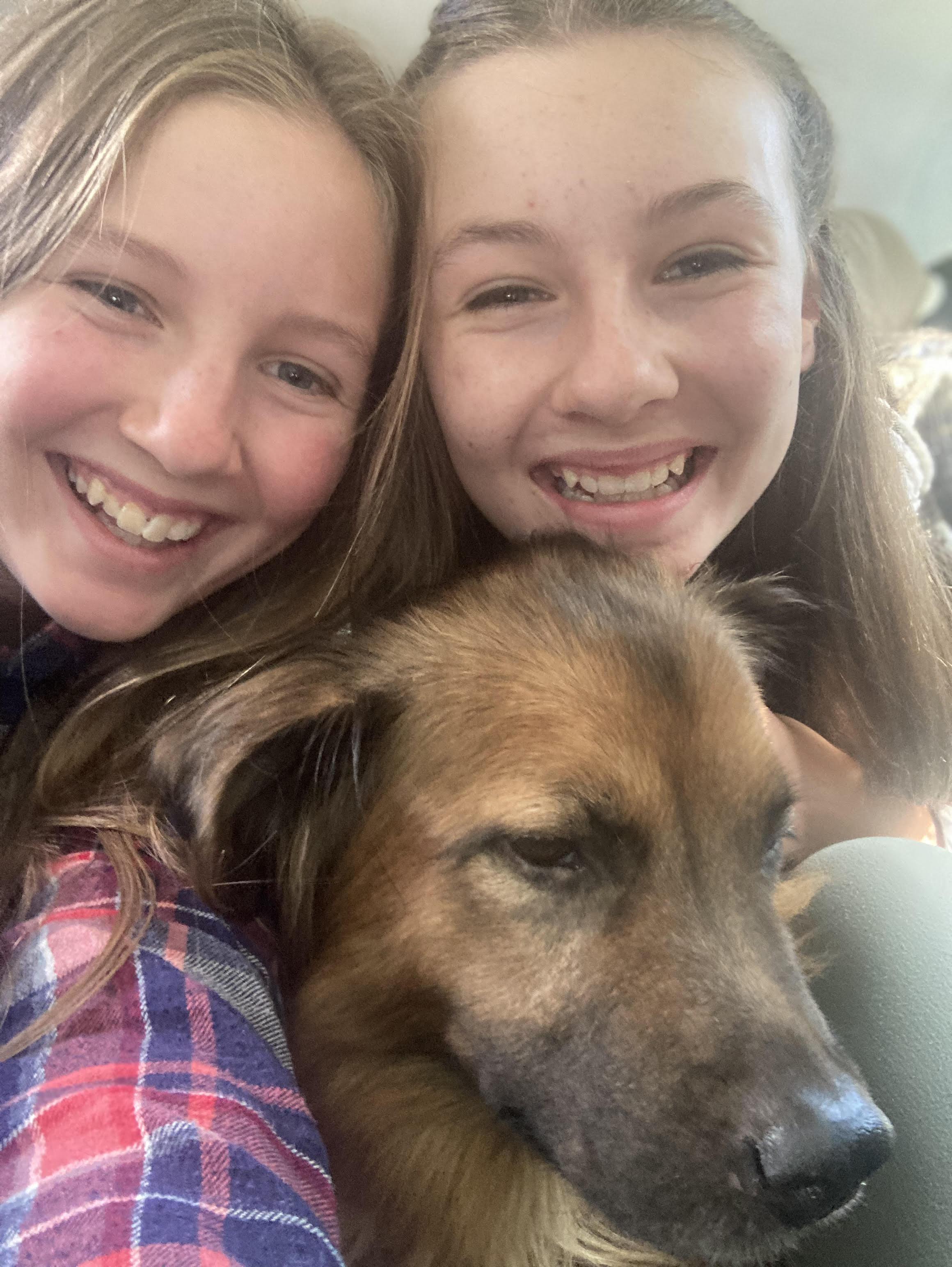
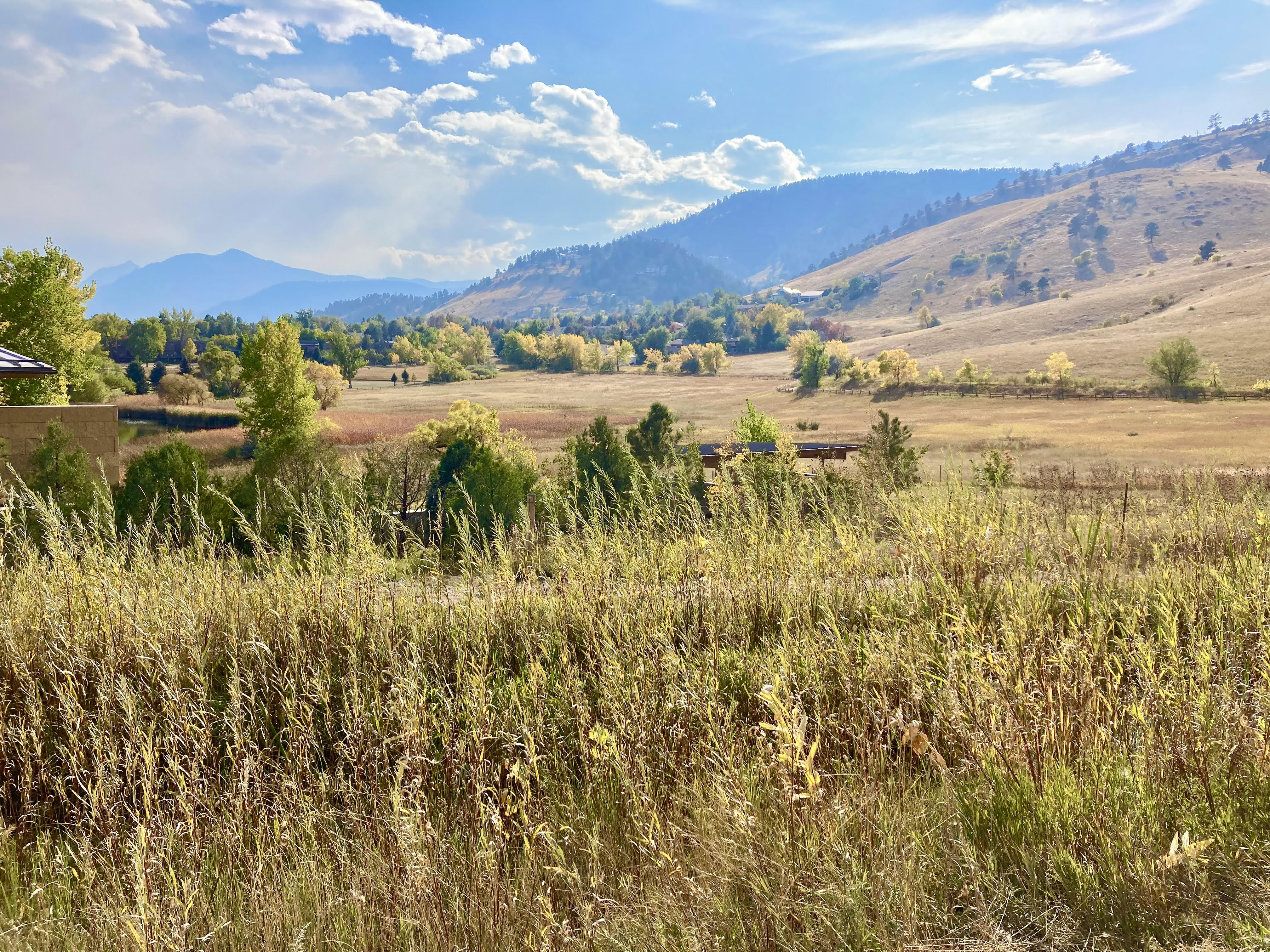
A quick walk, because it has truly been a most amazing and beautiful autumn here in Colorado! The morning is wrapped up with grammar work — squeezed in just before lunch.
We eat lunch late, around 1:15 or 1:30, a tangible rebellion against school lunch at 11 or earlier! Last year we each started our own grammar books: small, sturdy notebooks that include all the rules and examples of our studies that maybe one day could also serve as a reference. Weaving meaning into our work. That’s a driving point in my homeschooling.

While I had some formal instruction in grammar, in junior high, I remember nothing from those years. In 2001, I had to revisit grammar intenseLY as preparation for my M.A. teacher exam in Massachusetts. During that pedagogical episode, I crammed & soon forgot, thus, this grammar notebook is an attempt to learn sincerely and reference easily, all that we master! In addition to the parts of a sentence and a deep look at verbs: states of being verbs, linking, intransitive, transitive, and verb complements, oh my what fun, we have covered phrases and clauses. Today, we practiced grammar analysis (parts of sentence and speech) of classic literature sentences. We love these exercises, though they can be trying some days! Today’s lines were from Jane Austen’s Pride & Prejudice:

“I can guess the subject of your reverie.”

Pro. v. v. adj. n. prep. adj. n.

subj. —–AVP—— DO

Lunch was leisure and lovely. We sat around the coffee table on meditation cushions, shooing Happy frequently, eating and casually talking about the day and upcoming events. Halloween is on the mind, as well as our upcoming celebration of All Soul’s. The girls are going to dress up as dead prom queens. I’m going to be a character of Edward Gorey’s, familiar to many from PBS’ Masterpiece introduction. Stephen, a skeleton? We’re still working on his costume as we are having a hard time getting a tailcoat suit to match my period/style piece.

Why do we homeschool? This is a question frequently asked and rarely answered to the depth that its answer resides in me nor truly deserves. One small & somewhat cheeky answer is to eat our meals together, with lots of time & space. Mealtime is anchor point in our day: an opportunity to share gratitudes, eat mindfully, & sink into the simplicity of life. We nourish ourselves with food and presence. There’s a whole lot more answer to the “big question” but it really is a lifestyle choice, a thread that weaves our days. We step back from focusing on the endgame and live the process of learning and growing. There’s lots of talk about life being a journey, that we have to enjoy the ride, de-emphasize the destination, but not a whole lot of areas in our life that actually model this.

Reading aloud Sleepy Hollow by Washington Irving bookended our school day. We try reading this story every autumn and have had great fidelity this season! There was an interesting conversation about Irving’s language and storytelling versus Jane Austen’s. Both, writers of the English language on different continents were born in the late 18th century. Surprisingly, the folksy, gothic, Sleepy Hollow nudged past P&P, despite its lack of romance! Arlene really focused on Irving’s precise writing (but she said, he doesn’t sacrifice great vocabulary) and lack of amorphous (& lengthy) dialogue. Ada emphasized Sleepy Hollow’s superb plot compared to P&P, which she said wasn’t very compelling. It was amusing & heartwarming to listen & participate in this conversation for a variety of reasons. One, there was astonishment, since last year Jane Austen was all the rave and I had to keep quiet on the matter. I don’t particularly care for Austen’s novels.

We were a little short on transition time after this talk, so they hustled to get the bus for German class. LOVE that they can hop on public transit! They’re taking one class at Boulder High this semester and it has been nothing but smooth sailing. I spent my hour prepping dinner & reading a little of Ron Chernow’s biography on Grant. The late afternoon/evening was a bit of a jigsaw puzzle/relay race with Stephen tutoring, the one car, youth group’s vibe night, and the amazing gift of tickets to see a British a-capella group, Apollo5 in Denver. Managed to coordinate all the pieces for the evening with Stephen and I arriving on time despite the rain, heavy traffic & stress.

our own little “skyscraper box canyon” downtown Denver

The singing was soul-searing (in the best way imaginable) and hypnotic. The first few pieces, from their latest album, Haven, were Renaissance in origin & absolute perfection. Between the girls chorale performances and a few shows we’ve ventured to over the last couple years, I’ve discovered a real passion for a-capella, especially the vintage material!
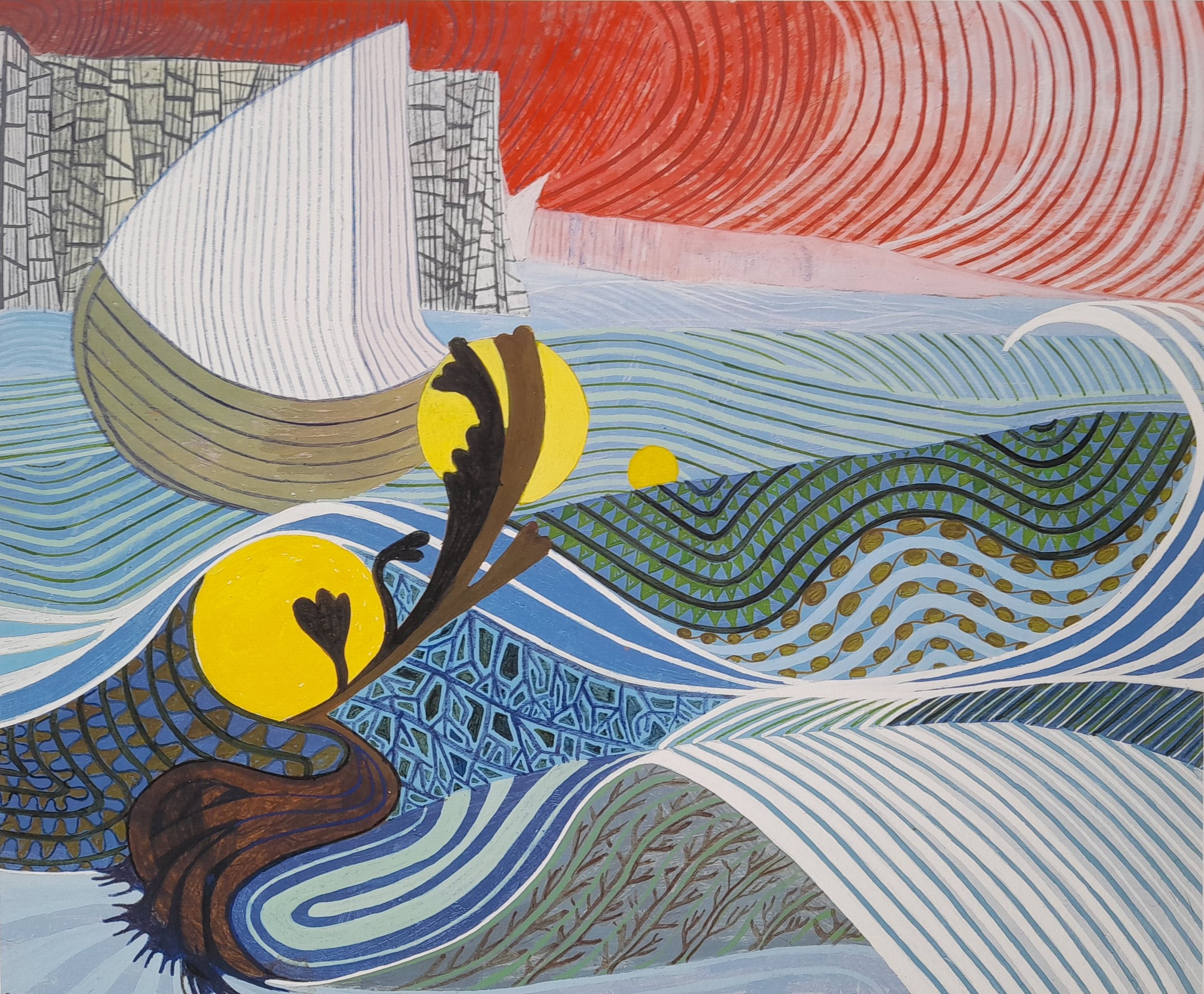
Haven, Apollo5

Par for the course was some LOVE peppermint chocolate back at home. We heard all about vibe night and how amazing Sprite REALLY is, as well as Arlene’s first place WIN for her Halloween costume!!! She won two free trips to winter camp with youth group in February!! Way to go Arlene!!!!!!!!!!!!!
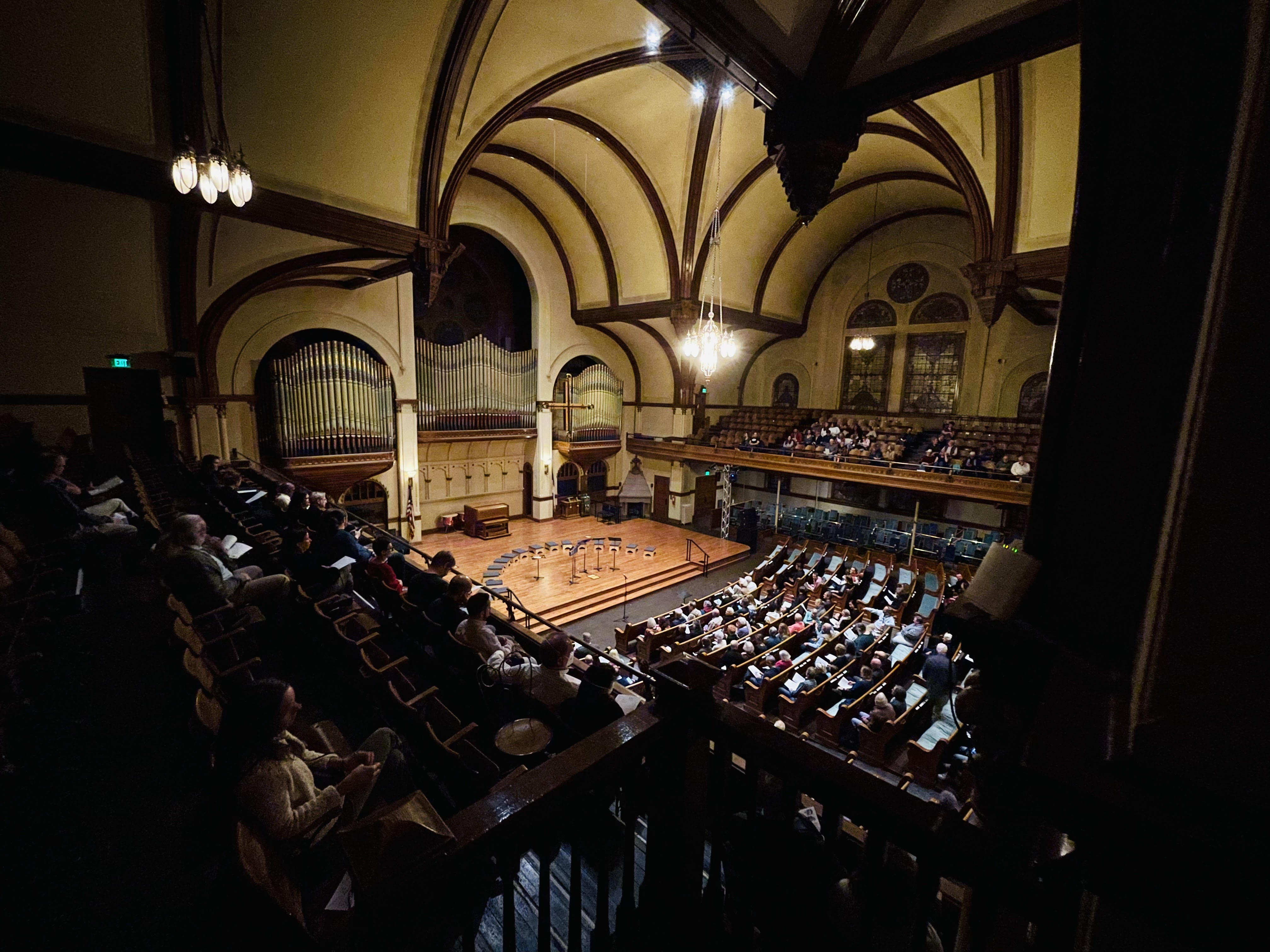
Center Presbyterian, Denver


Leave a comment

john muir block

We started a block of study on John Muir way back in November and did not finish until after the holidays. It was interrupted several times and ultimately I did not want to push through since it was going SO PHENOMENALLY WELL!! I borrowed curriculum from a friend several months before that and when I finally got around to reading through it, I was pleased. It took a few weekends to get my head wrapped around all of it; the volume of materials was truly overwhelming. Nonetheless, I found much of it to be well researched and decided to try out a story and the general approach. The language arts section of these materials focuses on stories, like I’ve been telling this year, but there are many suggestions for how to expand on the stories, culturally. The stories are actually biographies of folks from around the world – from Harriet Tubman to Ghandi.  In some ways, the approach of these materials reminded me of my teaching days and this lit a fire within!  Back then, I would completely immerse myself and my high school students in as many aspects of the culture we were studying. For example, when my students and I studied Islam we read background, learned vocabulary, studied maps, and dates. I also told my students, in story format, all about Muhammed, the prophet of Islam from my own research. They were captivated by hearing a story told to them.  We drew pictures and made books. We studied Arabic, listened to recitations of the Qu’ran, and Arabic music. In that way these borrowed curricula materials encouraged me to teach in…my own style! What a gift!

I started with John Muir, Scottish-American naturalist  well-known for his efforts to protect America’s wild places.  Just as in high school teaching, I decided to absorb as much of the subject matter as possible through my own readings– the subject being John Muir– which are fantastic! He was totally accessible, so informative, and truly entertaining.  I highly recommend reading him.

screen-shot-2017-02-01-at-8-15-47-am

We continued with our usual daily format although this was one of our longer blocks.

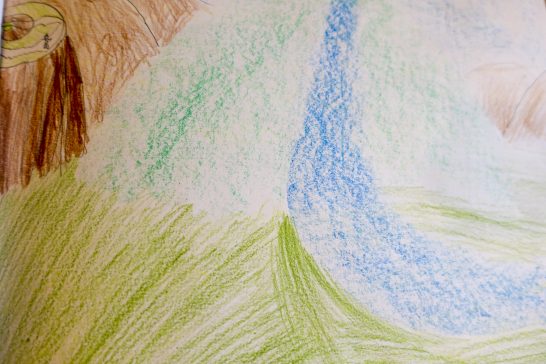
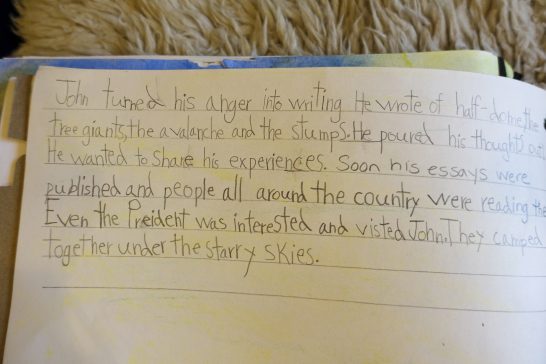
Day 1: I tell the story, we draw a picture and rest on it. Day 2: The girls re-tell the story, often acting it out with props and I help fill in the narrative gaps. We first work aloud the summary of the story and I write it on a large paper or board. The girls then begin their own summary writing. This is the beginning of our books! The cycle continues in this fashion, 4 days a week for several weeks. I overlapped some of our phonics words when appropriate and kept up with spelling.

After our circle time, which includes both seasonal and cultural songs, poems, and games we work on math problems, both on paper and aloud, followed by some brief phonics work and then a more substantial focus of the block’s cultural side –working on a specific poem, a Scottish song, or a dance.  We had so much fun with “Aiken Drum” which I did not know was Scottish! We’ve been singing that song for many years. We also learned the “Wee Willie Winkie” poem which reminded me of my cousin Alistair, from Scotland. He passed away two years ago this winter. The food of a culture, too are wonderful to explore.  Scotland is not well known for culinary exports and so I struggled here.  Haggis is apparently the national dish of Scotland, but with ingredients such as a sheep’s stomach, heart, liver, AND lungs we skipped for simple stews and barley porridge.  We made maps of Scotland, learned about islands, “seas” and the vast Atlantic Ocean between the United States and Scotland. We pulled out our own photo albums of Yosemite from two summers ago were we swam in the waters beneath famous Half-Dome and walked among the giant and ancient ones, the Sequoias of Yosemite.

Honestly the block came at such an opportune time. We too needed to “listen” like John Muir, to the calls within us (I know I did!), to the calls of the outdoors.  Happily, we hit the trails often during this block. Listening to oneself, like John Muir, requires tremendous courage and I was overjoyed at bringing such a wonderful role model into our studies.

We also read a lot of picture books on John Muir.

The block cycle: storytelling, re-telling/acting it out, working on our handmade books, and then repeat! We completed the block  in about 4 weeks, not counting the “breaks” of travel, holidays, etc.  The girls’ writing has grown  beautifully during this block– from a creative and engaging approach.  Their work is meaningful. Perhaps “meaningful work” is one of the the primary reasons I homeschool! As a teacher, I saw “meaningless” busy work and the display of dejection by students. Some learn to gear up for tests only, because to them, that’s what it is really about. Sometimes folks love to learn despite their school experiences!

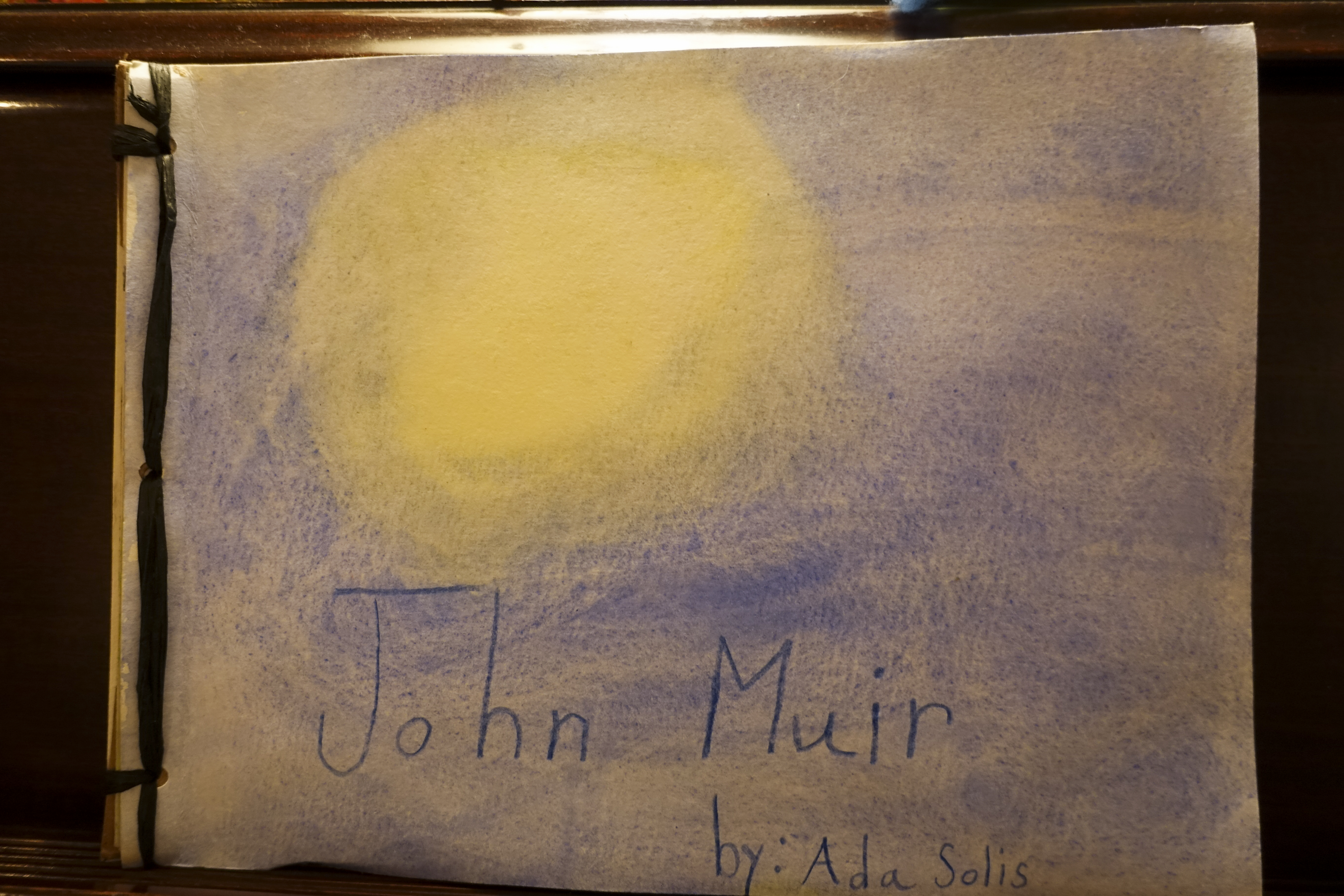
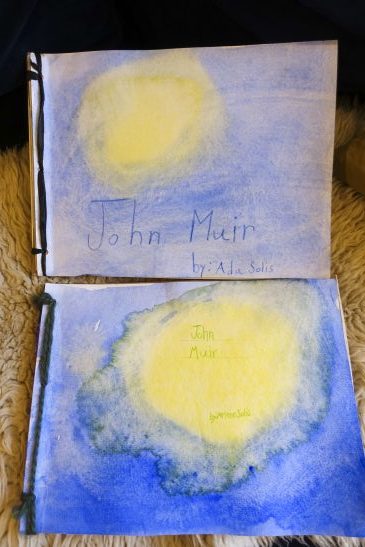
Ada’s book:

untitled-03155


untitled-03162untitled-03163untitled-03164untitled-03165untitled-03166untitled-03167

Arlene’s book (bottom):

untitled-03161


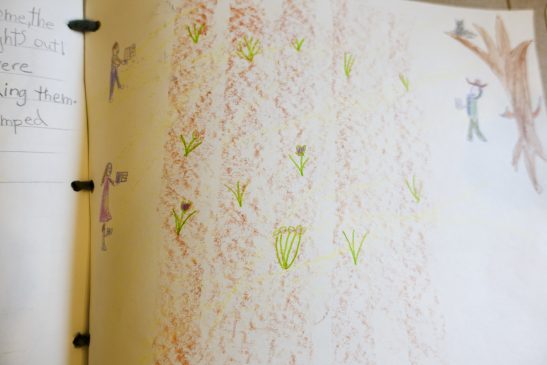
untitled-03173untitled-03174untitled-03175

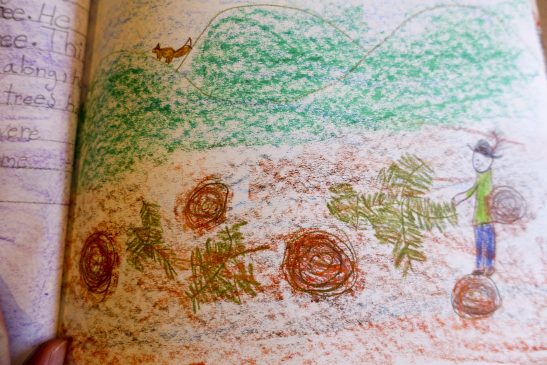
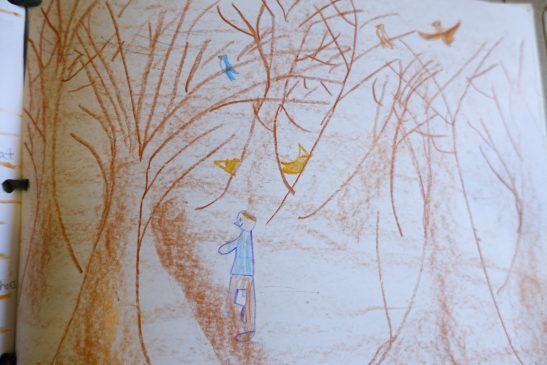
See John on the trail above left?

Suntitled-03176untitled-03177

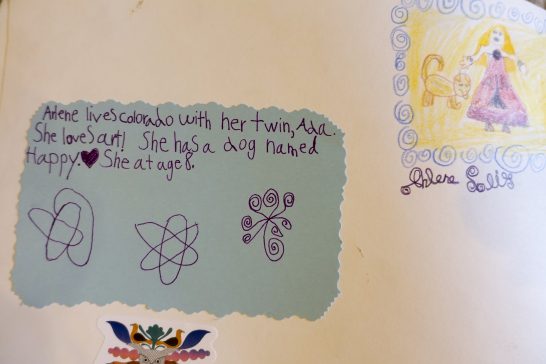
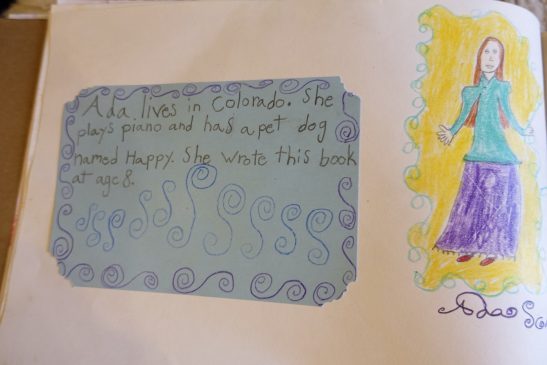
Then they wrote their own biographies for the end of the book along with a picture:

untitled-03178

untitled-03168

We took a break from writing books and caught up on some chapter books, a little more math, and couple trips to the museum. In fact, the museum was very helpful as an introduction to our next block!

untitled-2


1 Comment

st. michael’s

untitled-02362


St. Michael’s or Michaelmas is a special celebration in our home and has been for many years. I appreciate the opportunity to pause and look inward as we turn away from the wide-open summer into the inward season of fall. The festival carries with it themes of bravery, good acts and reflection. We began preparing for Michaelmas two weeks ago with a story about a small town long ago terrorized by a dragon and the simple, but very brave individual who took down the dragon. What dragons are we taking on this season? What are we afraid of? The girls are nearly 8 now  and so the challenges they face are more tangible than in years past. For example, both of the girls have been taking on the challenge (and fear) of various climbing structures and monkey bars at the playground.  We have made it a priority to try out different playgrounds each day and to take on the higher monkey bars, the curving ones, the rocks walls, the climbing ropes, jumping form high structures and to do it again and again and watch our fears slowly disappear.

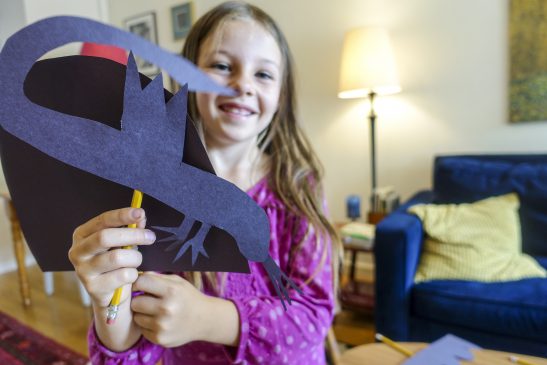
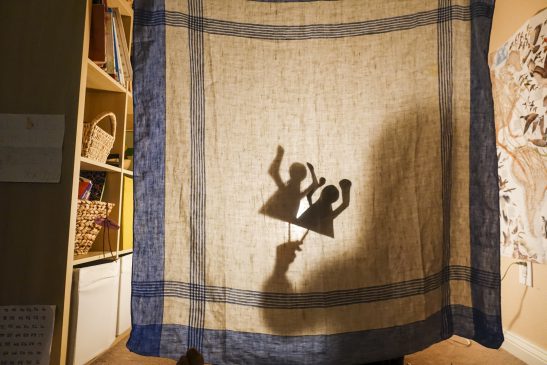
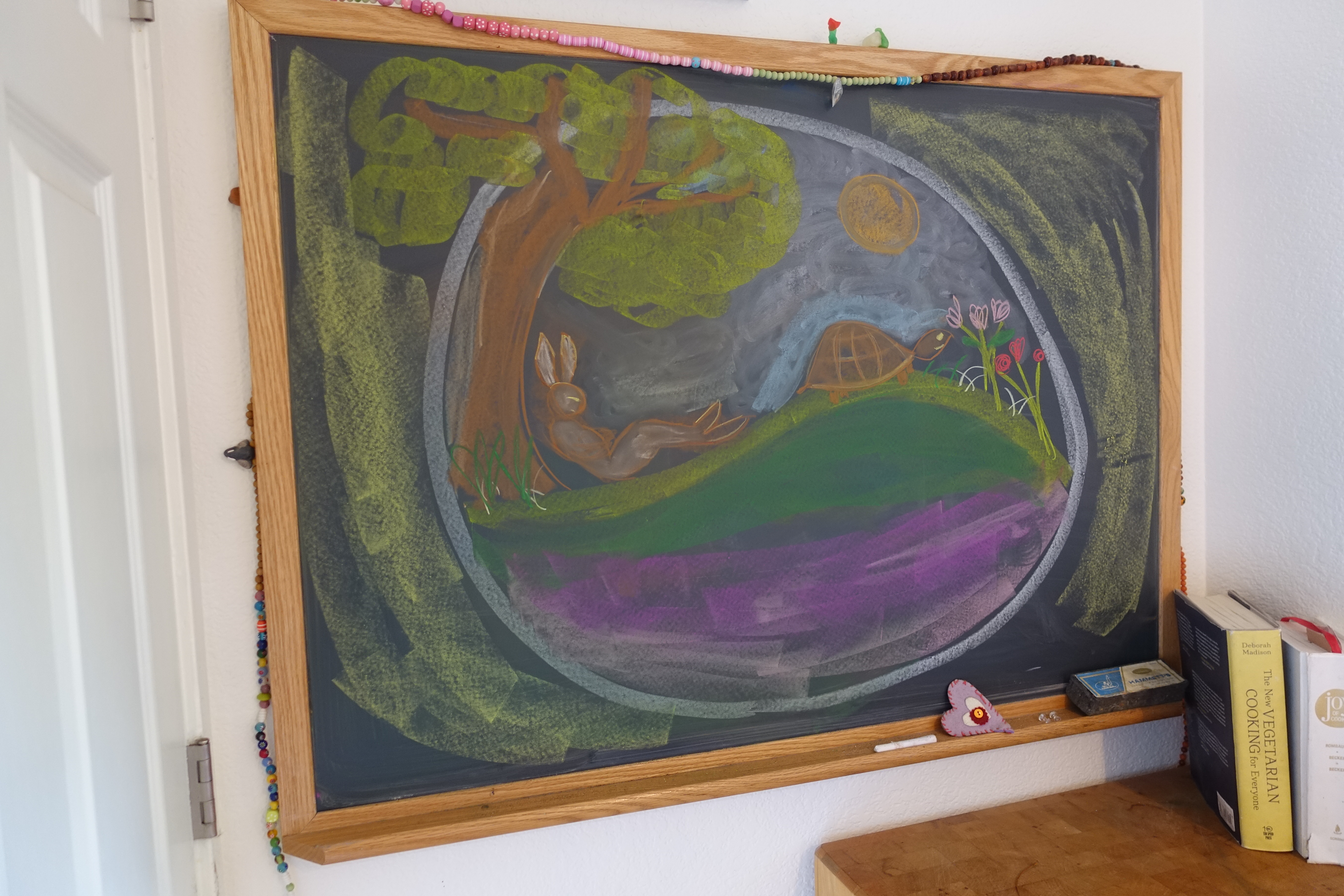
After I told the story of the dragon and we did some other reading, we created some beautiful dragon drawings with new techniques. We’ve tried to focus less on outlining but starting with the whole form- aiming to capture the feel and size not its exactness. I integrated a lot of form work into this story, too. We worked on “mountain” forms, “gate” forms, and a “stream” form. We collected and dried marigold and calendula petals to make our healing salve or courage salve (beeswax, oil and the extraction from these petals). We also cooked up a few batches of elderberry syrup ( to keep us strong and healthy in the winter months ahead). These are special fall traditions for us and I like to focus these activities in the weeks leading up to St. Michael’s. The following days we made up a puppet show from our dragon story and performed it many, many times, learned two St. Michael poems and continued our main lessons in language arts. We also finished a really fun novel called The Doll People by Ann Martin and started The Dragon Boy by Donald Samson.

(Arlene’s drawing on top, Ada’s below).

untitled-02623untitled-02622

This week I continued our language arts main lesson with a trickster tale from the Lakota about Iktomi. The girls love these stories and the trickster element appeals to them through humor, silliness and a message in there questioning right and wrong.  In addition to reading and phonics work, the girls did beautiful drawings of Iktomi and worked on beeswax modeling of the main characters in the story. They had a lot of fun reenacting the story, too. Rather than question and answer in our approach to comprehension, we re-tell, act out and create props or models from the stories. I kept extra time for festival prep and handwork this week too, although one of our projects was a bit of a bust (sewing felted dragons). We do a lot of active and mental math in circle time during these LA main lessons and I’m really proud of how well they are doing with their times tables and basic math facts. I think it is still very important to keep things hands on, too. We worked out lots of problems with the apples we’ve collected on walks. Sautéing them in butter afterward  is an enjoyable treat!

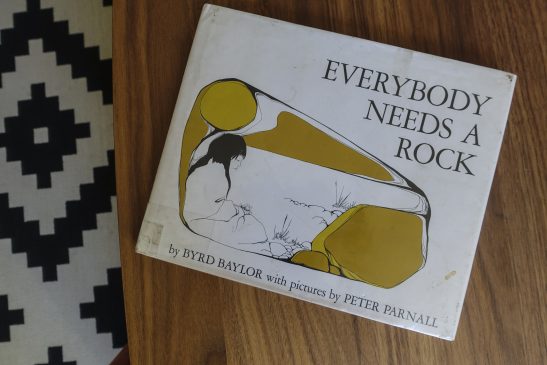
Something new we added this year was making a balance. We created a balance from a piece of wood and some rocks. We talked  little about good and bad deeds and what sort of day we wished to have. One equal of good and bad deeds or a day heavy in good or bad deeds? They loved this talk and the subsequent finding of rocks and making of each of their balances. Coincidentally (and I love when things like this happen), I had a book ready for Friday called Everybody Needs a Rock by Byrd Baylor that fit ever so-perfectly into this activity. She is one of my favorite authors and I’m truly over the moon that the girls appreciate her books, too. I don’t think she is for everyone! Not a lot of flash here– simple, resonating messages about simplicity and happiness and life. In it she gives rules about how to find one’s perfect rock. It is a personal matter and requires all of YOU to find that right rock. You feel, touch, look, smell, hold…think…

Throughout the day we talked about taking responsibility and doing the right thing–even when it is hard to do or when others are not doing it, but that we try to listen very hard to the spirit inside of us, leading us to our truth.

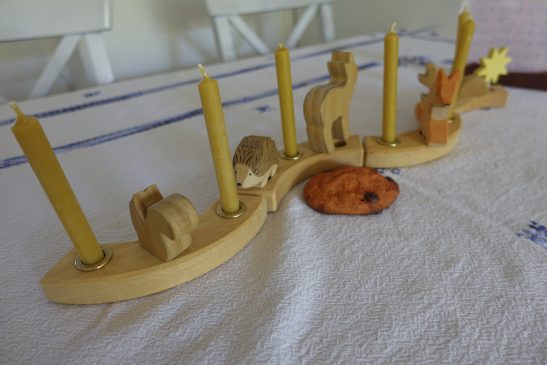
We baked our dragon bread and made a hearty soup for dinner. A & A recited our poems and then ate together by candlelight.

untitled-02599 untitled-02488 untitled-02498 untitled-02503 untitled-02506 untitled-02512 untitled-02593 untitled-02598 untitled-02597 untitled-02600 untitled-02602 untitled-02603 untitled-02604 untitled-02605 untitled-02606 untitled-02610 untitled-02609 untitled-02621

Happy cleans up from dinner every night.


2 Comments

second grade

dsc02145I, like many other homeschoolers I know, struggled to pin down homeschooling plans. Anthroposophy and Waldorf education have largely directed us these years — as well as our own spontaneous spirits.  I appreciate the creative emphasis in Waldorf education tremendously and what I’m learning right now is that there is room for my own creativity–especially since I do not follow a set curriculum. As I grapple with the stories for second grade (in Waldorf education typically Fables, Trickster Tales, and Saints), I keep finding myself drawn to Native American stories and ideas. One area I’m having a lot of fun planning  “out of the box” is in form drawing. What is form drawing? Form drawing is unique to Waldorf education.  According to a little summary from Steiner College: It helps improve eye-hand coordination, supports thinking in a non-intellectual way, aids in being more “flexible” as one learns the form in their body and then on paper.  The first year was mostly straight and curved lines, some running forms. This year we continue with running forms and mirror. So think Celtic art and symbols– interlocking lines and loops–that’s where we might head one day. So I’m looking at some of our favorite storybooks and pulling from them, illustrations, “forms” that we can practice. In Byrd Baylor’s Everybody Needs a Rock, there’s a simple drawing repeated throughout the book of a boulder that I’m using. Ultimately it is shaped by 6-7 arches that we will practice as part of our form drawing.

dsc02124

(painting and my verse writing from age 2.5)

dsc02133dsc02132dsc02129dsc02127

I decided to start out early and slow in August– with the hope of being able to correct or alter our path since I was faced with so many questions and doubts. Rather than one traditional block per time period (as is practiced in Waldorf education), I began our main lessons with two blocks, 3 days a week (Monday, Tuesday, & Wednesday), a nature/hike day (Thursday) and a history morning followed by *circus class and our lovely homeschool playtime (Friday).  It was an intense start because my children enjoy immersing themselves DEEPLY in material, translation: it takes hours to get through material and so our days were very long and intense. Too long, in fact. Nonetheless this is what we did our first few weeks:

*Circus: How can I express my gratitude?  I have been longing for a homeschool group that fit our academic, parental-child, and emotional world and somehow, some way, by divine intervention, I have found myself in the making of a wonderful homeschool group. The kids are participating in a circus class, followed by free play at  nearby park. Last Sunday we inaugurated the year with a family potluck and a start of school/being together ceremony.

Circle: We have a lot of fun during circle! I know for a lot of my friends, circle has not been very easy. I think like anything else, you (the adult) have to be into it and open to what groove works for you as a group–however small a group that is. We play games sing songs, and recite verses. We played a lot these first few weeks! I thought:  how long are we going to lead each other around blindfolded or mirror each other’s movements as a fun game? Are they going to want to pile all of our couch cushions into a mountain so we can roll down? Or be kneaded like bread on baking day?  I decided to really be patient and provide time and space for this year’s circle time. We act like animals, recite poems, jump into yoga poses, and skip around the house. It takes time to connect and this is a  gem in our day.

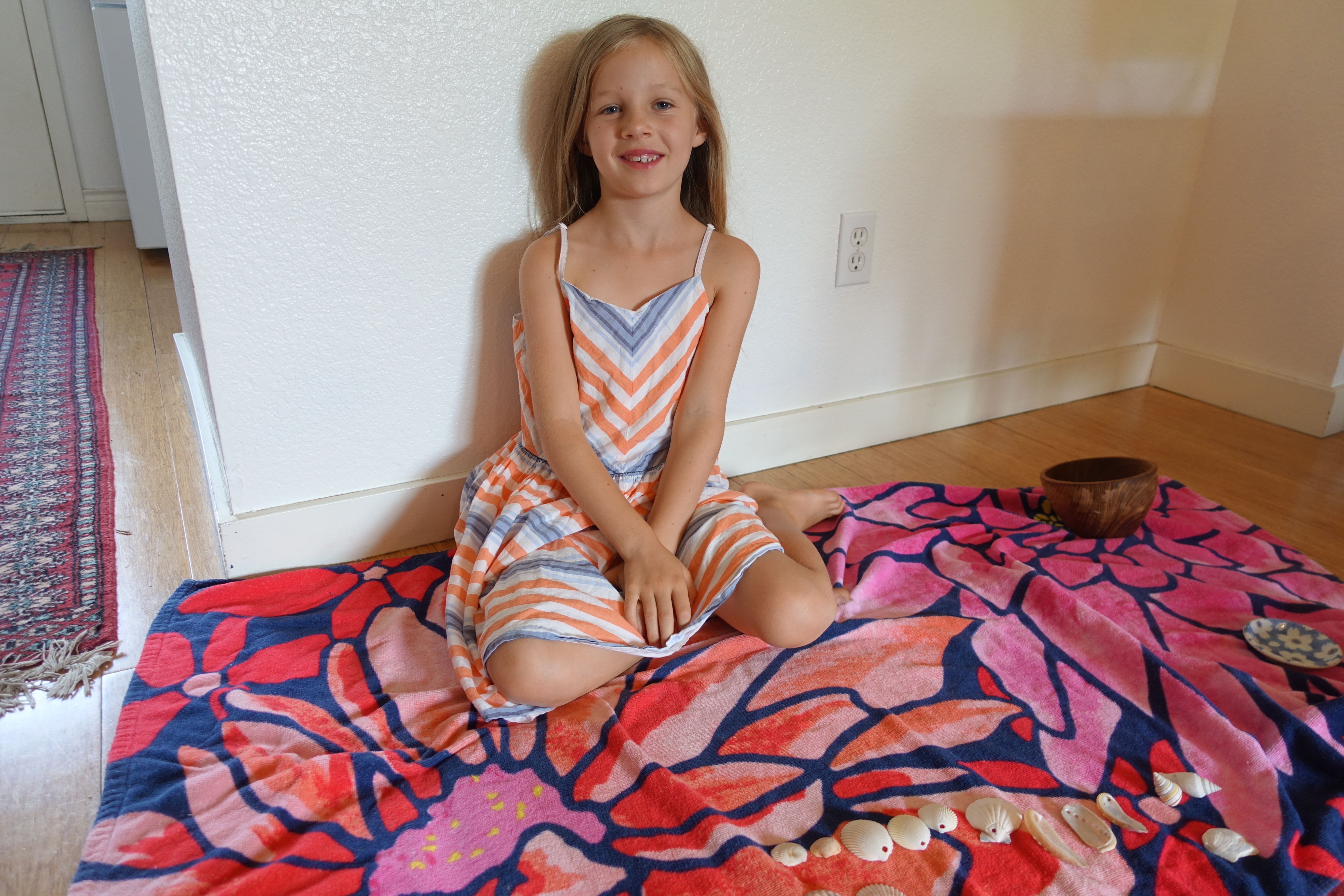
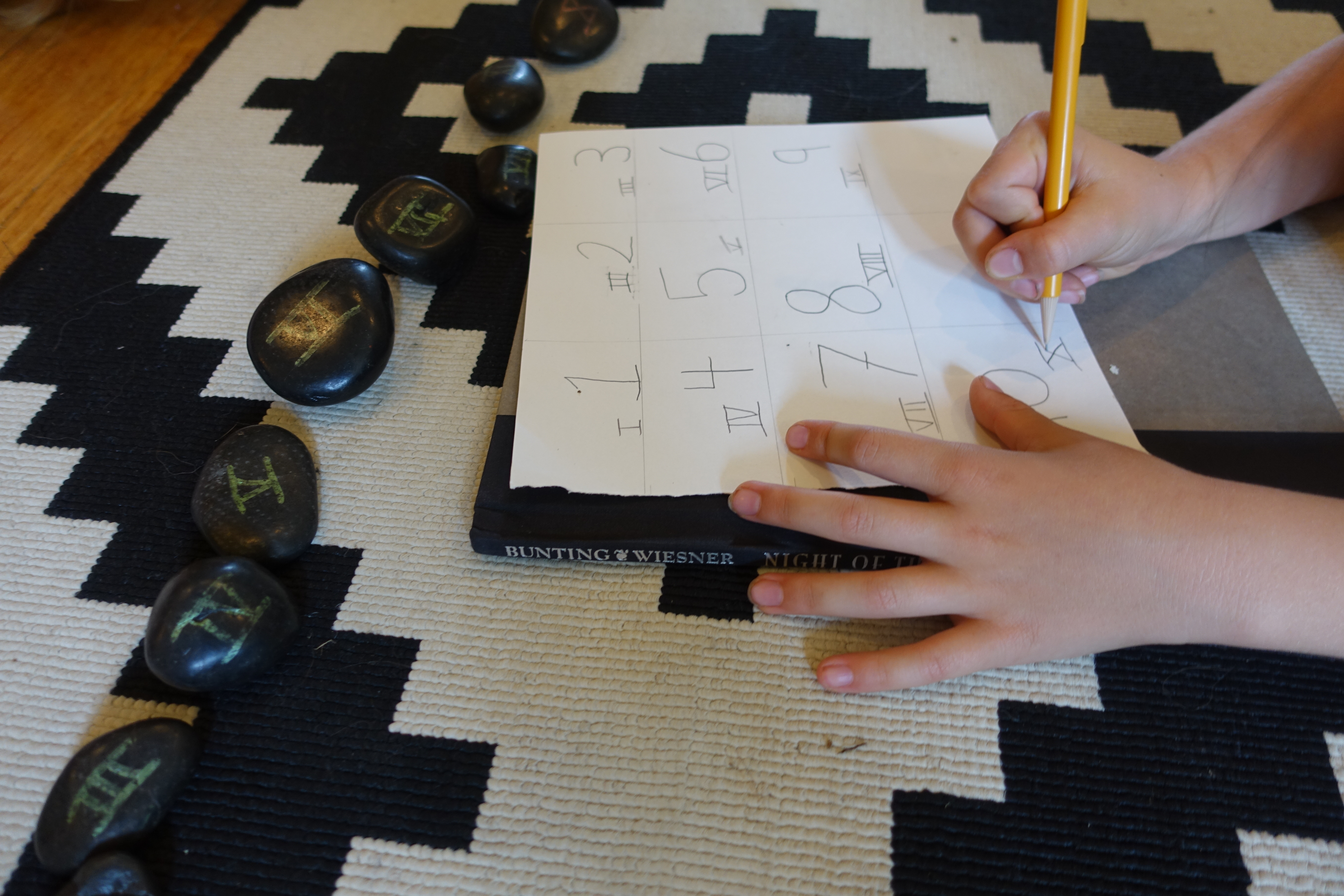
Math: Review of Arabic and Roman numerals with a challenge.  I told a sweet container story about seashells from the beach which would guide our math block for the following weeks. In a creative, narrative form, I spun a tale of how seashells are made and a brief summary of their life cycle. I then re-introduced the math gnomes from last year (plus, minus, divide and multiply) as we pulled out our beach towels and bartered shells, shark teeth and special beach gems– all the while having to utilize our skills in math! They absolutely LOVED this. It was hands on, stimulating, engaging and super fun!  In subsequent weeks I introduced even/odd, counting in groups, number bonds all with an active and written component. Some days we played games with a mathematical component after our active math. Favorites: cards, mancala, and backgammon.

Language Arts: Aesops’ Fables are on tap right now. The girls get comfortable on the couch and beam at the start of story.  Storytelling is done in my own words, by candlelight.  I emphasize certain sounds which we then practice afterward by way of phonics.   Over the following days the girls re-tell the story together, often with pros we make as part of our lesson.  We follow it up with drawings and summarizing sentences in our lesson books. Learning is meaningful and creative, not rote and laborious.

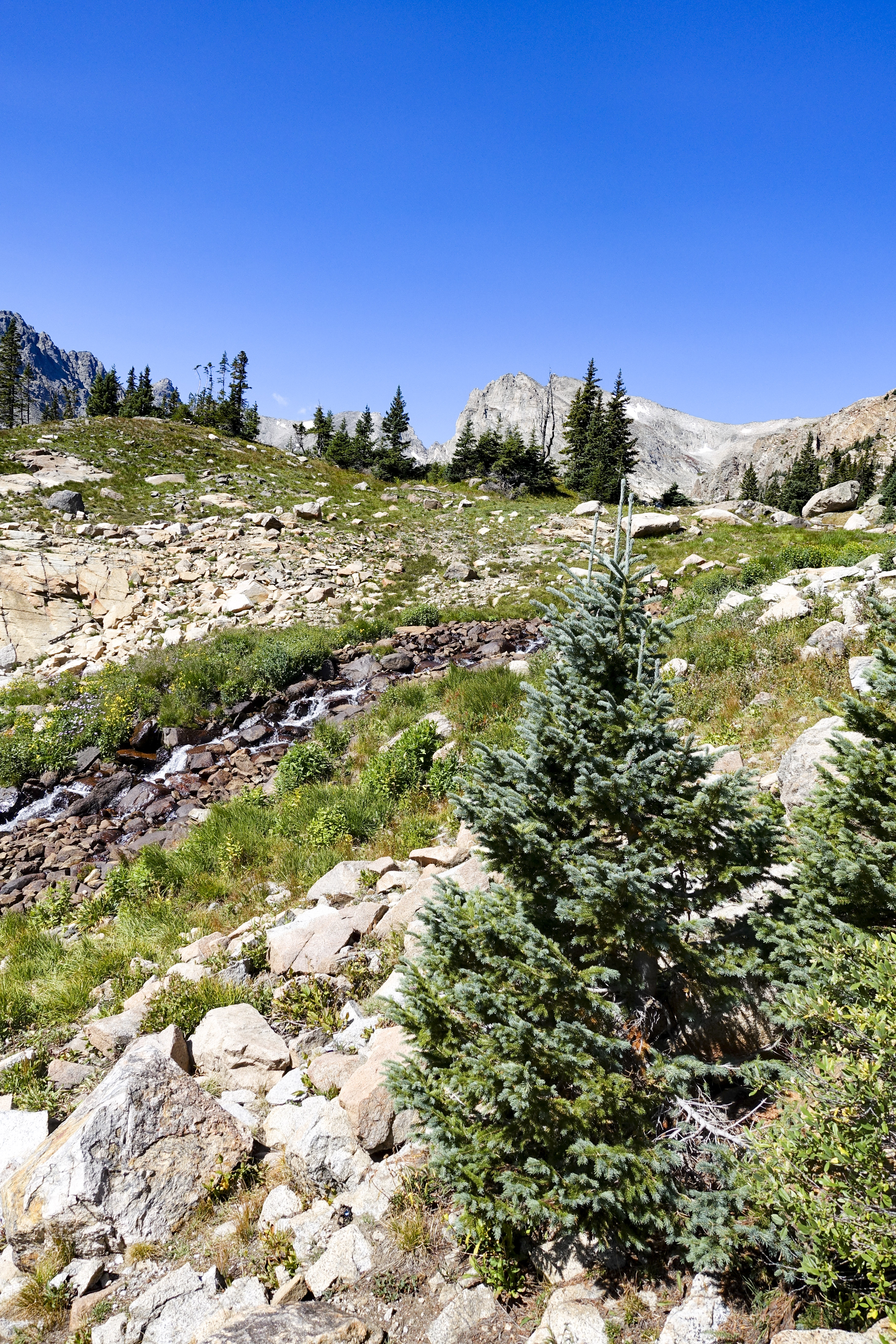
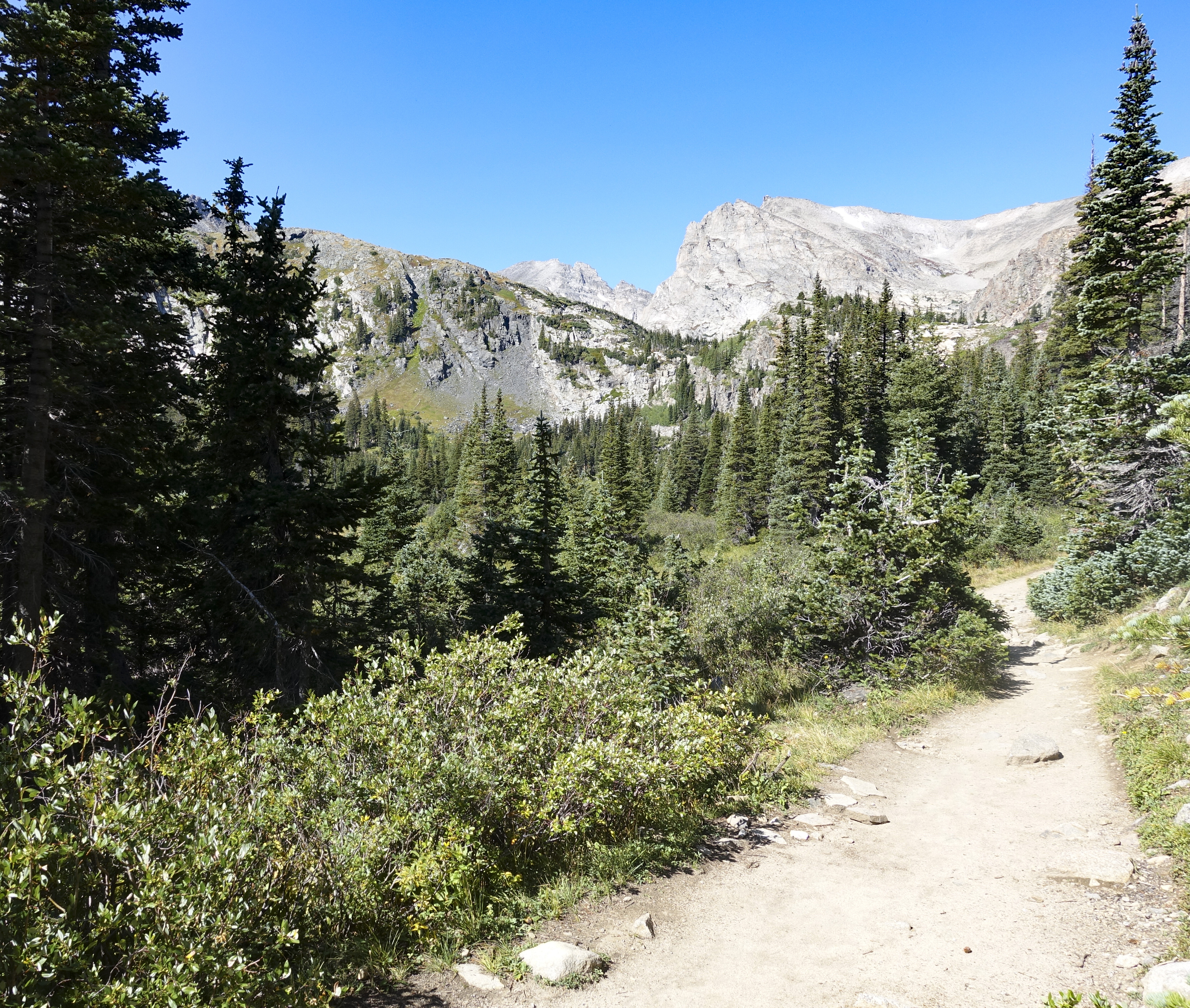
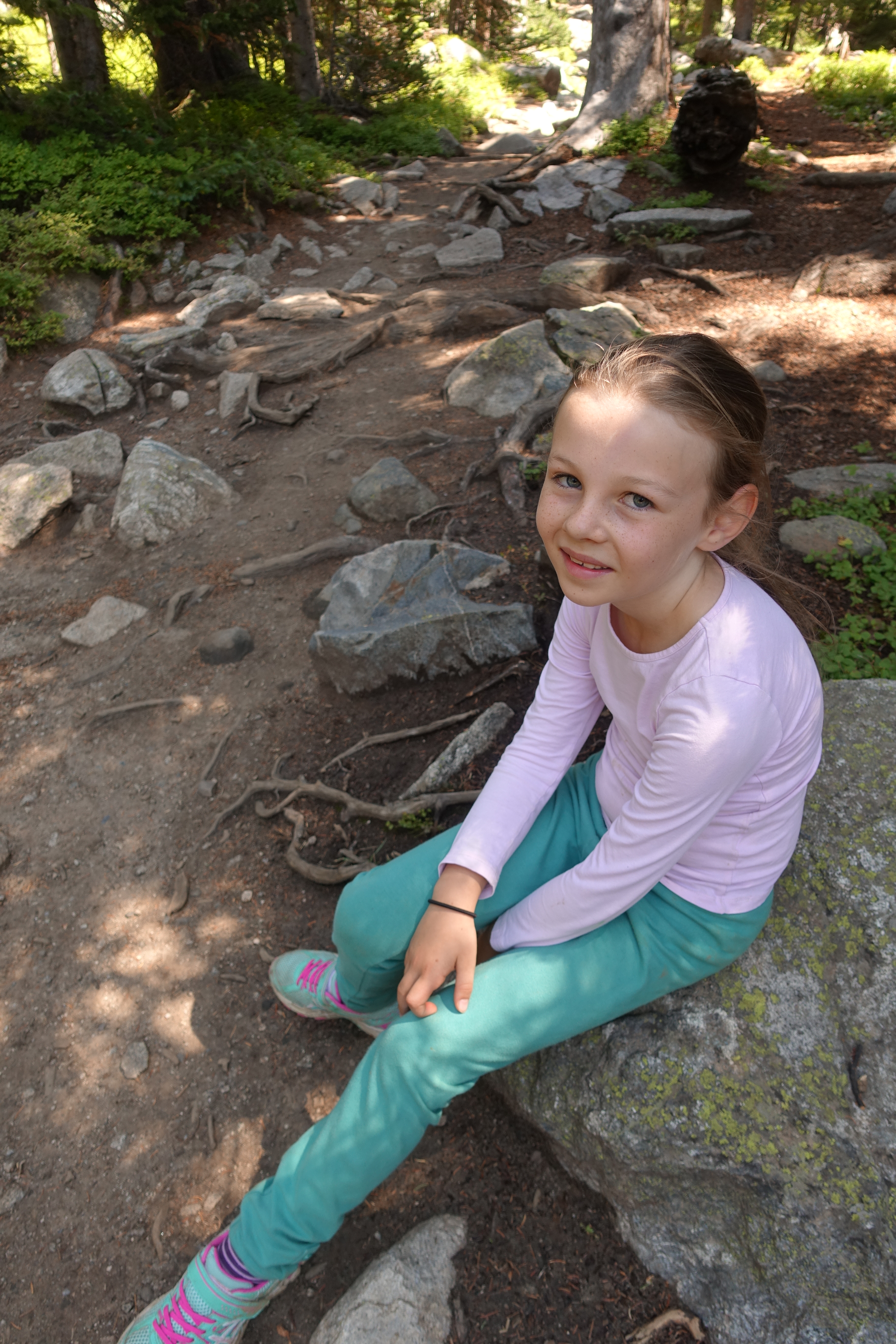
Nature/Hiking: Thursdays we hike and embrace a monthly theme. August: peaches, mushrooms and crickets. September: ladybugs, fiery sumac, and the changing Aspen leaves all around the Rocky Mountains.

untitled-02215untitled-02209untitled-02210

History: Our history morning was the product of some serious deliberation. We started with a timeline of our own lives in hopes of beginning to understand before and after. We also outlined the continents and made our first world map. Since history is my strength, I narrated my own story about human evolution and the start of civilization in Mesopotamia.  I wanted to provide some historical foundation this year and I’m doing it by way of an ancient bird named Pee-Wee and her adventures experienced through the millennia. I hope to make our history mornings hands-on and full of stories. Epic of Gilgamesh was really a hit! A real surprise, but nonetheless a success.

Arts: one aspect of Waldorf education that I especially appreciate is how it is interdisciplinary and infused with art. We move and dance to learn through our body, we model with clay and beeswax, paint and draw, act out our learning through drama and sing often.

We’re also doing piano lessons twice weekly with Stephen and weekly German language classes. Both going very well.

dsc02146

dsc02250dsc02176dsc02251dsc02222dsc02184dsc02247dsc02255

untitled-02185untitled-02183dsc02197untitled-02181


Leave a comment

Storytelling

image

Last night I went to a local workshop on storytelling. If you’d ask me a few years ago if I wanted to go to a workshop on storytelling, I’d have looked at you funny.  Yet, last night it felt entirely natural and timely! The girls love storytelling and I like it too except, well, I don’t know how to tell stories! How to really start them, how to make up a middle..uhm, how to end them?  I often find inspiration for stories from the current season or animals. For the first time in the girls’ lives they are living in a winter wonderland! This is their first truly wintry season and it certainly has provided a bit more magic and background to the magical winter season. I’ll also just say here, I’m SO VERY grateful they haven’t freaked out about the cold. Yet. 🙂

I wanted to learn how to tell funny stories, silly stories, and on the fly stories. I didn’t really know how the workshop would work. How could I “learn” to tell stories in a couple hours? In the end I left with the understanding that if I want to tell stories I need to prepare a little. I should tell stories I like and I perhaps think about why I ‘m compelled to those stories. However, what really brings it all together is to be genuine and invested in your story. Tell it like you mean it and you and your listeners will enjoy it!

The morning was an inspired storytelling time for us all. I retold the story of “Rory the Smallest Reindeer” a tale from Ireland as told to me last night and the girls just loved it. Then their turns. It led to many wonderful variations and some very long stories. Scenes of which are posted below.

It is such a special opportunity to sit with others and share stories. We do it all the time–tell our stories to one another, but here is another angle, storytelling for fun, entertainment, connection and learning. I think storytelling speaks to a deep part of our humanity. I mean how long have we been telling stories to each other? Certainly since we started speaking!

image

image image image image